This report describes trends in Member country policies for industrial development and competitiveness in order to promote economic growth, wealth creation and employment. Government policy has shifted over the past decade from a focus on "industrial development" to a concern with "industrial competitiveness" in order to raise or achieve industrial competitiveness at international level.

Development Dialogue Seminars
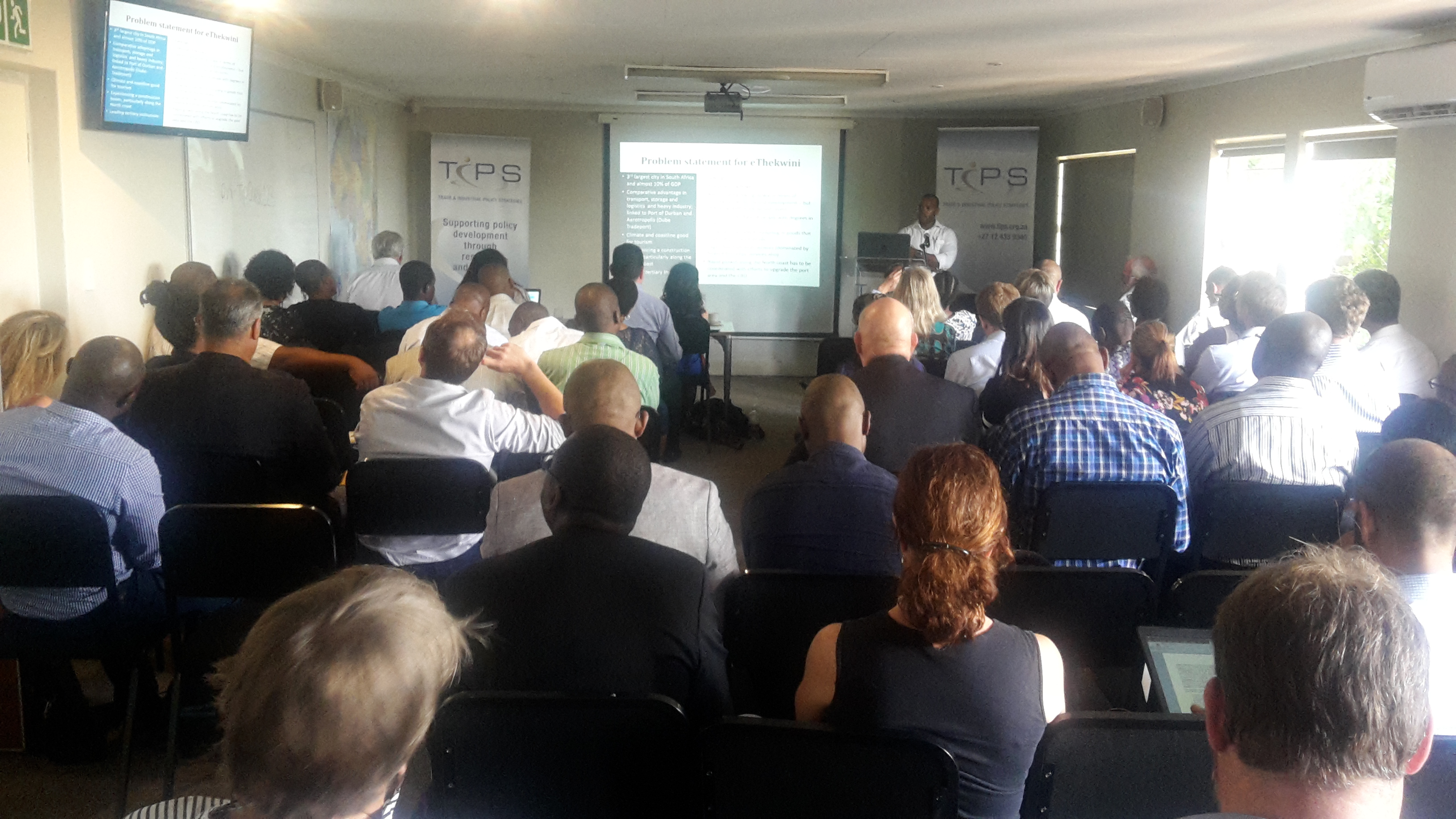
The Development Dialogue Seminar is a seminar series hosted by TIPS. The seminars offer a platform to share views and ideas on specific development issues and alternative policy strategies.
Though the seminar programme has been designed for government officials for whom the themes tackled are of relevance, the seminars fact focuses on a wide range of topical development issues. The themes covered span the informal economy to specific trade negotiation challenges. The seminars also attempts to offer perspectives from other countries in the region and beyond.
Who can attend?
Government officials and others who contribute to policy are targeted by the seminar series but all are welcome, though places are limited.
If you would like to attend please contact Rozale Sewduth at rozale@tips.org.za. Please specify food allergies if any, as a light lunch will be served prior to the seminar.
Many of the programmes and policies designed by the DTI represent a major departure from the policy framework used by the previous government.The previous government was primarily concerned with ensuring that South Africa was self-sufficient for political and strategic reasons. Consequently, domestic industry was protected by high tariff barriers, the exchange rate was allowed to appreciate (thus discouraging manufactured exports) and assistance to industry took the form of demand-side interventions. This policy framework failed to create a dynamic manufactured goods sector and was not capable of creating a sufficient number of jobs to make a meaningful impact on unemployment. In…
The last decade has seen a revival of regional industrial policy in the Western world. New policies have been built on recent insights into the drivers of competitive advantage and are characterised by a focus on local production systems, networking and partnerships, and more strategic forms of policy intervention. In addition, policy formulation and implementation has generally become part of an interactive process of consultation and consensus building. To a large extent, it involves the co-ordination and reshaping of existing instruments rather than the development of entirely new ones. This paper discusses the emergence of new forms of industrial policy…
Recent literature on industrial districts and enterprise clusters suggests that the grouping of enterprises into sectoral and geographic clusters gives rise to a certain collective efficiency that can enhance competitiveness and foster industrialisation. This paper reports the results of an analysis of eight African enterprise clusters: three in Kenya that were the subject of original research, and five others for which substantial secondary literature was available. The study addresses three questions: First, do the clusters have the characteristics associated with successful industrial districts elsewhere? Second, to what extent have they been able to respond to opportunities and shocks in their…
The purpose of this paper is to review the industrial performance of African economies during the 1990s and to then discuss the principal reasons why this performance, particularly with respect to the manufacturing sector, continues to be so poor in the majority of countries. The discussion will be structured as follows. Section 1 outlines the broad objectives of industrial restructuring as these have been interpreted by the World Bank. Section 2 addresses the weaknesses of the main data sources that are generally relied upon in assessing the industrial sector. Section 3 reviews the performance of the industrial sector, looking specifically…