The economies in Scandinavia have for long periods had high work effort, small wage differentials, high productivity, and a generous welfare state. The seminar will explore the economic and political equilibrium in these economies and how they combine models of collective wage bargaining, creative job estruction, and welfare spending. The presenter will give an overview of the wage bargaining systems and how they fuel investments, enhance average productivity and increase the mean wage by allocating more of the work force to the most modern activities. The presenter will also show how the political support for welfare spending is fuelled by…

Development Dialogue Seminars
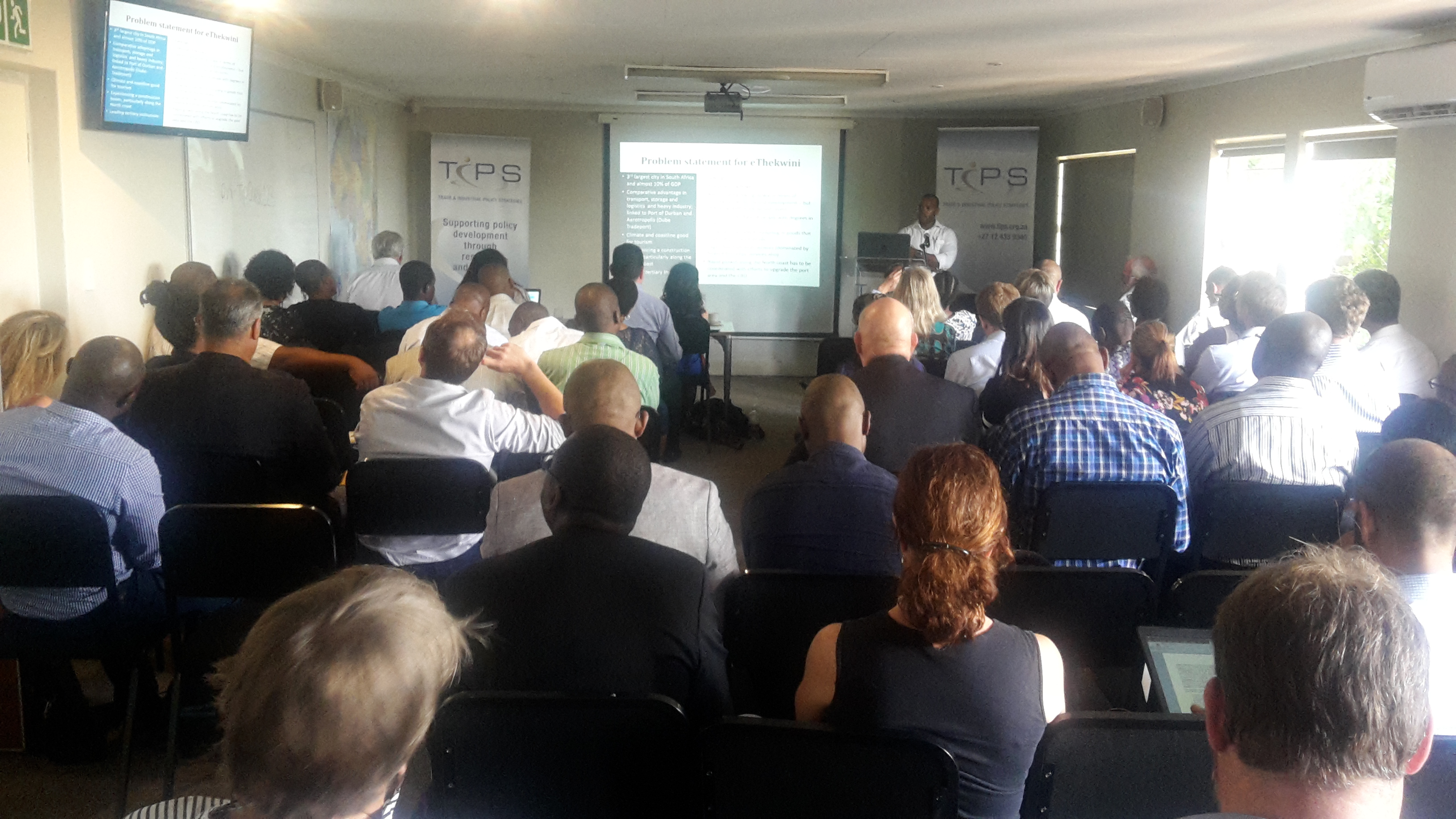
The Development Dialogue Seminar is a seminar series hosted by TIPS. The seminars offer a platform to share views and ideas on specific development issues and alternative policy strategies.
Though the seminar programme has been designed for government officials for whom the themes tackled are of relevance, the seminars fact focuses on a wide range of topical development issues. The themes covered span the informal economy to specific trade negotiation challenges. The seminars also attempts to offer perspectives from other countries in the region and beyond.
Who can attend?
Government officials and others who contribute to policy are targeted by the seminar series but all are welcome, though places are limited.
If you would like to attend please contact Rozale Sewduth at rozale@tips.org.za. Please specify food allergies if any, as a light lunch will be served prior to the seminar.
TIPIC: STEEL - WHERE TO FROM HERE? The steel industry is in crisis, with a significant decline in local production, falling prices and global overcapacity. The crisis has seen the dissolution of Evraz Highveld and threats to other major producers. In response, the government is seeking ways to ensure that South Africa retains its core steel capacity – historically a central pillar of the industrial economy. The seminar will explore the global and domestic factors behind the downturn and key options for addressing it. PRESENTER: DR NEVA MAKGETLA PRESENTER: DR NEVA MAKEGTLA sENIOR Economist: Trade and Industry (TIPS) Neva Makgetla…
TOPIC: PRESENTATION OF THE LATEST QUARTERLY MANUFACTURING BULLETIN Understanding the trends and views of manufacturing firms contributes to improved implementation of sector strategies and industrial policy. The Quarterly Manufacturing Bulletin is an initiative of the Manufacturing Circle that provides current views of manufacturing firms and an analysis of trends in the South African manufacturing sector. The focus of this development dialogue will be to present the findings of the survey covering the first quarter of 2016 and have a discussion around strategies to support the manufacturing sector in ways that support employment and equitable economic growth. PRESENTER: BABA-TAMANA GQUBULE Economist:…
Event: Thursday, 30 July 201 5, 09:00 – 12:00 followed by lunch TIPS, in association with the Department of Trade and Industry, the Embassy of Japan and Japan International Cooperation Agency (JICA), hosted this workshop to discuss the Special Economic Zone (SEZ) programme and the lessons emanating from the Asian experience. The objective of was to reflect on the policy experiences of SEZs in Asia, and to have practical discussions on relevance to South Africa. As South Africa deepens and expands its approach to using SEZ as a lever of industrial policy, it is important to understand the lessons from…
BACKGROUND Coming out of the Malaysian experience on a ‘Big Fast Results’ methodology, South Africa ran an Operation Phakisa on the ocean economy. Operation Phakisa is a results-driven approach, involving setting clear plans and targets, on-going monitoring of progress and making these results public. The Phakisa looked at the untapped potential of South Africa’s oceans and developed a number of projects to support investment, job creation and economic development. Dr Edwin Ritchken will present on some of the key issues emerging from the Ocean Economy Phakisa. Aquaculture was identified as a priority sector in the Oceans Economy Phakisa. Aquaculture is…