This volume critically evaluates current proposals to target industries with trade and industrial policies. It begins by explaining why proponents' arguments make sense only in theory -giving them a superficial appeal-and why in practice targeting has led to a string of costly failures. Proponents argue that governments could bolster their firms' international competitive position through subsidies to raise profits, enter new markets, invest in research, and preserve domestic employment. Careful examination shows that targeting has failed to meet any of these goals in the past because private markets have outsmarted government bureaucrats as firms, investors, and consumers have found ways…

Development Dialogue Seminars
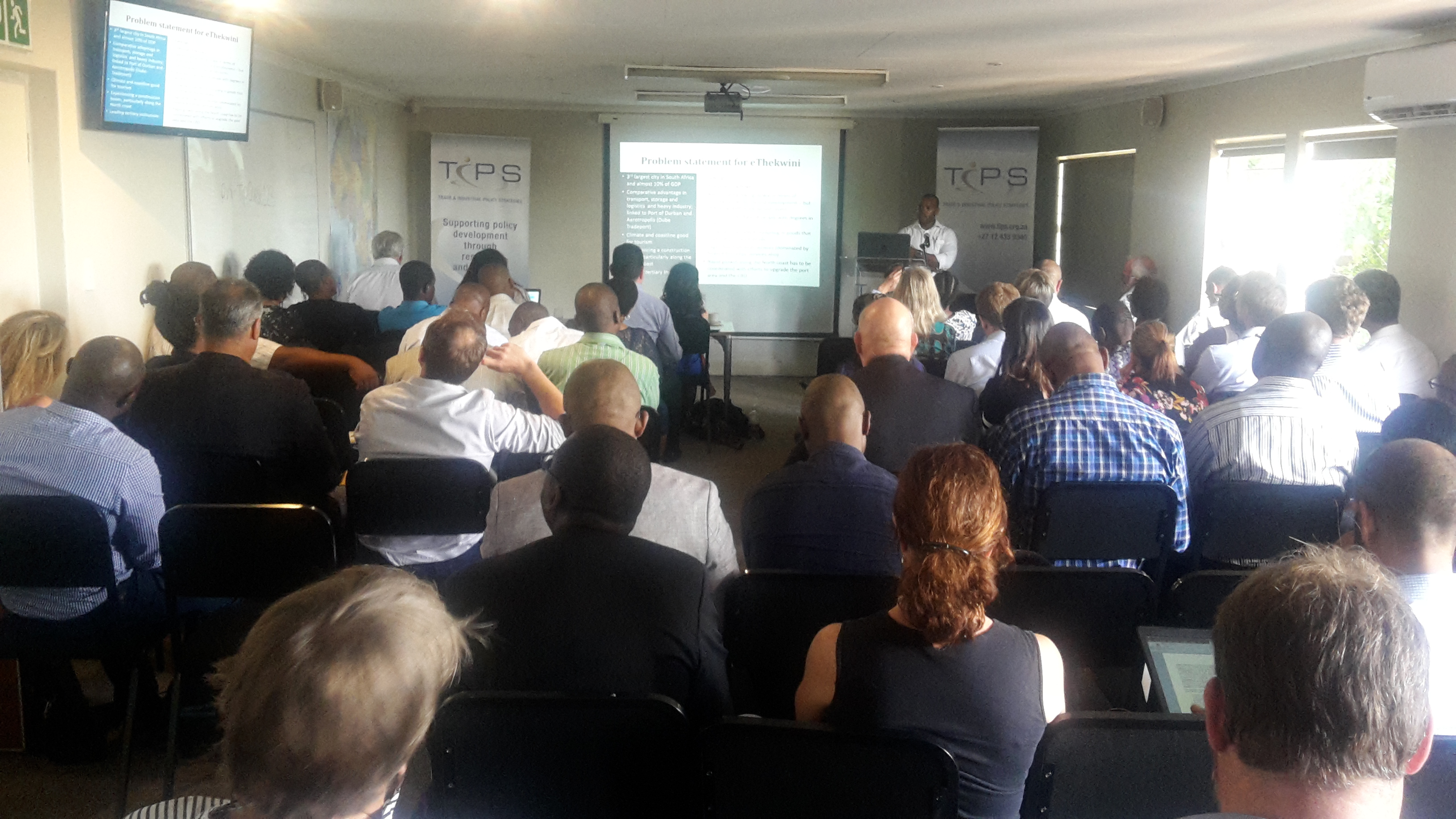
The Development Dialogue Seminar is a seminar series hosted by TIPS. The seminars offer a platform to share views and ideas on specific development issues and alternative policy strategies.
Though the seminar programme has been designed for government officials for whom the themes tackled are of relevance, the seminars fact focuses on a wide range of topical development issues. The themes covered span the informal economy to specific trade negotiation challenges. The seminars also attempts to offer perspectives from other countries in the region and beyond.
Who can attend?
Government officials and others who contribute to policy are targeted by the seminar series but all are welcome, though places are limited.
If you would like to attend please contact Rozale Sewduth at rozale@tips.org.za. Please specify food allergies if any, as a light lunch will be served prior to the seminar.
The basic policy changes towards increased market orientation and private sector development in recent years have been necessitated by global economic developments. In the newly independent states (NIS) and the former socialist economies of Eastern and Central Europe, a major shift to market orientation and private-sector development through liberal policies was essential. This became equally necessary for developing countries, because of major global trends towards competitiveness and efficiency. Rapid and revolutionary technological developments in communications and production processes have resulted in globalization of markets and communications, and increased internationalization of production. The Uruguay Round Agreements are expected to result in…
In most developing economies, industrialization has constituted a major objective of development strategy and government policy. It has been recognized that rapid industrial growth is the principal means of achieving increased employment, incomes and living standards and that the socio-economic transformation of these countries cannot be achieved except through accelerated industrial expansion. The strategy for industrial growth has, however, varied considerably. In several countries, emphasis has been primarily on promotion of private-sector investment, including that of transnational corporations (TNCs). At the same time, in a number of African, Asian and Latin American countries, the State in the past assumed a…
This paper explores the links between international trade theory and the practice of trade and industrial policy in open economies, with special attention to three areas where theoretical lessons have been misunderstood in policy debates. I argue that the "concertina rule" for tariff reform justifies reductions in high tariffs but not moves towards uniformity and particularly not increases in low tariffs. I show that the basic principles of tariff reform are the same in unilateral, multilateral and customs union contexts. Finally, I suggest that the theory of strategic trade policy does not justify subsidies to high-technology industries.
This paper looks at some of the relevant and critical issues facing the South African government in devising an industrial policy. It provides an overview of some of the key theoretical issues in industrial policy and looks at some of the critical choices facing South Africa with reference to the international experiences. The paper refers to areas where the industrial policy debate in South Africa requires more attention specifically around ways of increasing physical investment, issues market structure, and the need for better economic co-ordination.