Following the debt crisis of the 1980s a large number of developing countries, particularly in Latin America and Africa, and to a lesser extent in Asia, have undergone what have been termed as ‘Structural Adjustment Programmes’. A certain degree of orthodoxy has developed around these programmes although clear evidence on either their success or failure is still inadequate and widely debated. Most of these programmes advocate a rapid opening of hitherto protected economies; substantial degrees of deregulation to free the private sector from government interference; restructuring of the government budget to reduce fiscal deficits, often through the cessation of subsidies…

Development Dialogue Seminars
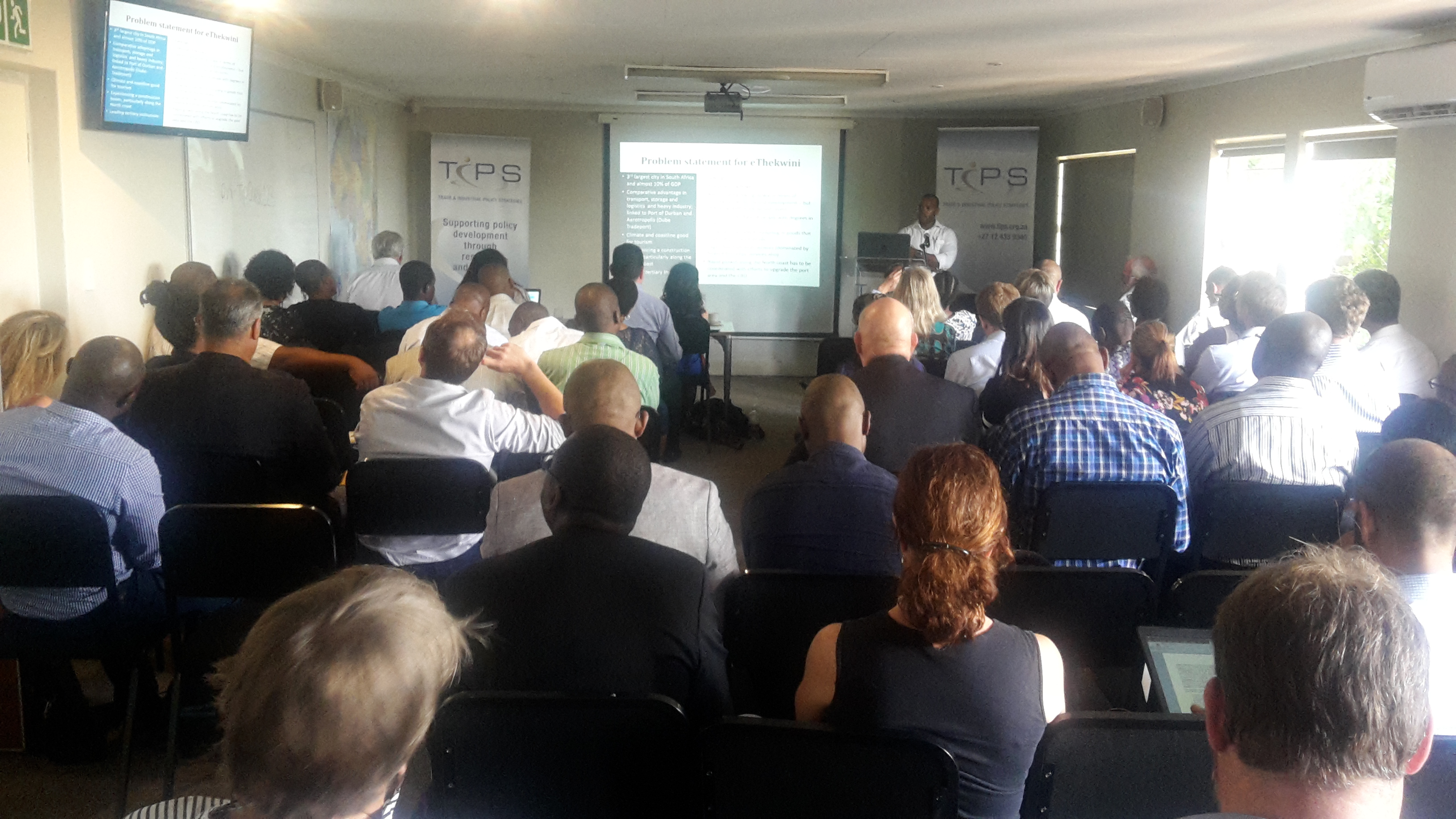
The Development Dialogue Seminar is a seminar series hosted by TIPS. The seminars offer a platform to share views and ideas on specific development issues and alternative policy strategies.
Though the seminar programme has been designed for government officials for whom the themes tackled are of relevance, the seminars fact focuses on a wide range of topical development issues. The themes covered span the informal economy to specific trade negotiation challenges. The seminars also attempts to offer perspectives from other countries in the region and beyond.
Who can attend?
Government officials and others who contribute to policy are targeted by the seminar series but all are welcome, though places are limited.
If you would like to attend please contact Rozale Sewduth at rozale@tips.org.za. Please specify food allergies if any, as a light lunch will be served prior to the seminar.
This paper evaluates the current NIP proposals by first explaining the general economic consequences of the 'protective state' that facilitates market exchange and economic efficiency, and the 'redistributive state' that arbitrarily directs the organization of individual activity according to political criteria. It is shown how government promotes economic cooperation and prosperity when it is restricted to protecting private property rights and the freedom of exchange, and how the redistributive or 'planning' role of government leads to economic conflict, stagnation, and a loss of' individual liberty. The adverse effects of governnient planning are illustrated by examining the consequences of the NIP…
This paper examines the experience of Hungary with the development and implementation of its industrial policy. Hungary is a particularly interesting case study for several reasons. First, industrial policy is particularly important for Hungary. It is a small country with few resources beyond bauxite and fertile soil. Thus, like Japan, it is highly dependent on foreign trade for its economic welfare. Second, Hungary has undertaken significant reforms in its economic system, moving from the dirigisme of Soviet-style central planning in the 1950s to the market-oriented reforms introduced by the New Economic Mechanism (NEM) of 1968 and the additional reforms implemented…
The advocacy of an "industrial policy" or a more extensive "government-business partnership" has come into vogue in recent years in the United States, particularly among political leaders. Indeed the idea that the United States must move in that direction appears to have become almost conventional wisdom in Washington. Although it is not clear precisely what an "industrial policy" might entail, or how a "business-government partnership" would benefit this country's economic growth, it is quite apparent why these ideas are so widely promoted and so favorably received. American political and business leaders believe that the prime reason for Japan's phenomenal economic…